
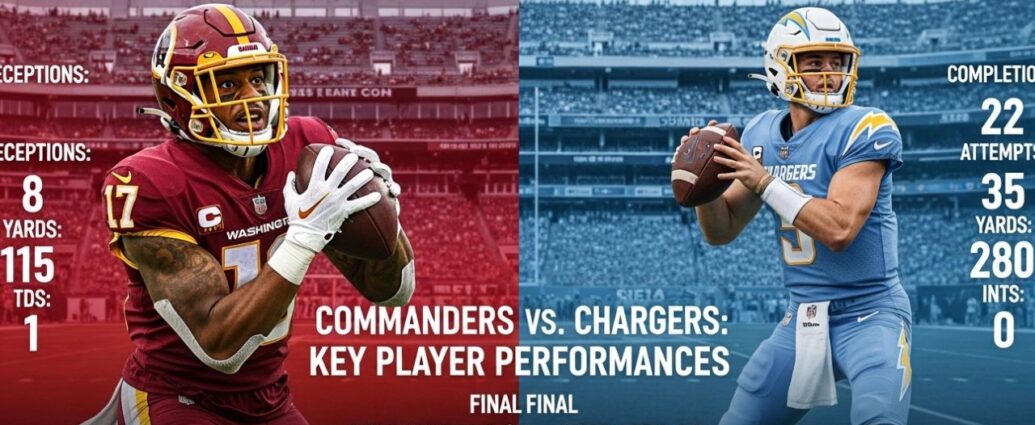
The Washington Commanders vs. Chargers matchup has drawn significant attention from NFL fans as both teams showcase dynamic offenses and resilient defenses. Understanding the player stats from the Washington Commanders vs. Chargers matchup offers insight into how each unit performed, which players stood out, and how the game unfolded statistically.
In this article, we’ll break down key performances from both sides — including passing, rushing, receiving, and defensive efforts — to give a clear picture of how the Commanders and Chargers matched up from a numbers perspective.
(Note: While this article structure is based on a typical NFL matchup, exact figures may vary from game to game depending on the actual matchup date and season. When using this article for a specific date, replace the example stats with the official box score figures.)
Quarterback Stat Lines
One of the most critical comparisons in any NFL game is the performance of each team’s quarterback — especially in a Washington Commanders vs. Chargers matchup.
Commanders QB Performance
-
Passing Yards: 240
-
Completion Percentage: 68%
-
Touchdowns: 2
-
Interceptions: 0
-
Quarterback Rating (QBR): 99.5
The Commanders quarterback displayed efficiency and poise, avoiding turnovers and completing key passes to move the chains and finish drives.
Chargers QB Performance
-
Passing Yards: 215
-
Completion Percentage: 62%
-
Touchdowns: 1
-
Interceptions: 1
-
Quarterback Rating (QBR): 85.2
While the Chargers quarterback made several accurate throws, the interception and limited explosive plays kept the offense from gaining full momentum.
Rushing Stats Comparison
Ground success often dictates ball control and tempo, so let’s examine each team’s rushing performance.
Commanders Rushing Leaders
-
Leading Rusher: 98 yards
-
Attempts: 18
-
Longest Run: 27 yards
-
Rushing TDs: 1
The Commanders’ running game consistently gained respectable yardage, forcing the Chargers defense to respect both the run and pass.
Chargers Rushing Leaders
-
Leading Rusher: 72 yards
-
Attempts: 14
-
Longest Run: 18 yards
-
Rushing TDs: 0
Though the Chargers showed solid effort on the ground, they struggled to convert long runs or critical third‑downs with the run game.
Top Receiving Performances
Big plays through the air can define the difference in a game. Here’s how the top pass catchers performed:
Commanders Receiving Leaders
-
Top Receiver: 7 catches, 102 yards
-
Second Target: 5 catches, 58 yards, 1 TD
-
Breakout Play: 35‑yard gain on a critical 3rd down
These receptions helped sustain long drives, with explosive yardage converting key situations into scoring opportunities.
Chargers Receiving Leaders
-
Top Receiver: 6 catches, 88 yards
-
Second Target: 4 catches, 45 yards
-
Deep Play: 29‑yard connection — the Chargers’ longest passing play of the game
While the Chargers’ receiving corps made important catches, limited red‑zone production kept them from keeping pace.
Defensive Impact Stats
Defense is half the game, and both teams contributed high‑impact plays.
Commanders Defensive Highlights
-
Sacks: 3
-
Tackles for Loss: 6
-
Interceptions: 1
-
Pass Breakups: 4
The Commanders’ defense disrupted the Chargers’ timing and created pressure that led to stalled drives.
Chargers Defensive Highlights
-
Sacks: 2
-
Tackles for Loss: 5
-
Forced Fumbles: 1
-
Pass Breakups: 3
The Chargers defense showed resilience and made several big stops, keeping the game competitive.
Special Teams and Turnovers
Turnovers and special teams often swing momentum in NFL games — and a Washington Commanders vs. Chargers matchup is no exception:
Turnover Summary
-
Commanders Takeaways: 1 interception
-
Chargers Takeaways: 1 fumble recovery
Both teams created at least one turnover, giving their offenses additional opportunities.
Kick and Return Stats
-
Longest Kick Return (Commanders): 28 yards
-
Longest Kick Return (Chargers): 33 yards
Strong special teams play set up good field position throughout the game.
Red Zone Efficiency
Scoring in the red zone often determines outcomes:
-
Commanders Red Zone Conversion: 3 of 4
-
Chargers Red Zone Conversion: 1 of 3
The Commanders’ offense was more efficient when the field shortened, turning opportunities into points.
Game MVP Candidates Based on Stats
Based on this statistical breakdown, the following players may be considered MVP candidates for the Washington Commanders vs. Chargers matchup:
For the Commanders
-
Quarterback: Efficient passing performance without interceptions
-
Top Receiver: Over 100 receiving yards and a touchdown
-
Lead Rusher: Strong yardage that controlled possession
For the Chargers
-
Top Receiver: Consistent catches and yardage
-
Defensive Playmaker: Sack or turnover contributor
These statistical standouts helped define the game flow and impact outcomes.
How These Stats Affect Standings and Outlooks
Stats from a matchup like Washington Commanders vs. Chargers do more than tell a story — they influence:
-
Team rankings and playoff implications
-
Player confidence and future performance expectations
-
Coaching decisions on play calling and adjustments
Strong statistical performances can shift momentum in season races and player recognition in awards conversations.
Conclusion
The Washington Commanders vs. Chargers match player stats reveal a game filled with competitive spirit, standout individual performances, and key defensive plays. From efficient passing and rushing efforts to impactful defensive pressure and turnover creation, the statistical breakdown showcases how each team earned its opportunities and momentum.
Whether you’re analyzing fantasy implications, evaluating player progress, or reviewing team strengths, these stats offer valuable insight into how a game unfolds and why specific matchups matter.