
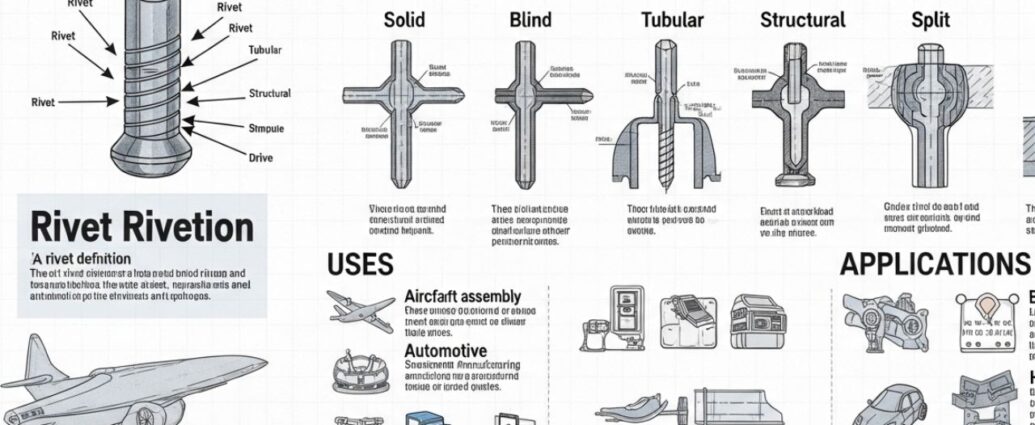
A rivet definition refers to a mechanical fastener used to join two or more materials together, usually metal, by inserting a metal pin through pre-drilled holes and deforming one or both ends to hold the materials securely. Rivets are commonly used in construction, aerospace, automotive, and metalworking industries due to their strength, durability, and reliability. Understanding rivets, their types, and applications is essential for engineers, builders, and DIY enthusiasts alike.
What Is a Rivet?
In simple terms, a rivet is a permanent fastener. Unlike screws or bolts, rivets do not rely on threads for holding power. Instead, they are inserted into aligned holes of the materials to be joined, and the tail end is deformed or “peened” to create a secure joint. This makes rivets ideal for situations where vibration or stress may loosen other fasteners.
Types of Rivets
Rivets come in various forms, each designed for specific applications.
Solid Rivets
Solid rivets are the most common type and are typically used in aircraft, bridges, and structural steel applications. They require a hammer or rivet gun to deform the tail end for fastening.
Blind Rivets (Pop Rivets)
Blind rivets, also known as pop rivets, are ideal when access is only available from one side of the materials. These rivets are widely used in sheet metal work, automotive repair, and household projects.
Tubular Rivets
Tubular rivets have a hollow shaft, making them easier to install with less force. They are commonly used in leatherwork, belts, and light metal joining.
Drive Rivets
Drive rivets are installed by driving a pin into the rivet body, expanding it to form a secure connection. These are commonly used for light-duty applications in signage, electronics, and appliances.
Applications of Rivets
Rivets are highly versatile and can be found in many industries.
Construction
Rivets are used in structural steel frameworks, bridges, and building facades to provide strong, permanent joints.
Aerospace
Airplanes often rely on rivets to fasten metal sheets because they can withstand vibration, pressure, and extreme environmental conditions.
Automotive
Rivets are used in vehicles for assembling chassis, panels, and other components that require permanent fastening.
DIY and Household Projects
From metal crafts to leatherworking, rivets provide durable and aesthetic fastening solutions for home projects.
Advantages of Using Rivets
Understanding the benefits of rivets helps explain why they remain popular despite other fastening options.
-
Permanent and Strong: Rivets create joints that are highly resistant to vibration and loosening.
-
Durable: They withstand stress, heat, and environmental conditions.
-
Versatile: Available in different sizes, materials, and types for various applications.
-
Cost-Effective: Simple design and easy installation make rivets economical for large-scale projects.
How Rivets Are Installed
Installing a rivet involves several steps:
-
Drill a Hole: Ensure the hole diameter matches the rivet size.
-
Insert the Rivet: Place the rivet into the aligned holes of the materials to be joined.
-
Deform the Tail: Using a hammer, rivet gun, or specialized tool, deform the tail end to secure the joint.
-
Inspect the Joint: Ensure the rivet is tight and the materials are firmly held together.
For blind rivets, a rivet gun is typically used, making installation easier for inaccessible areas.
Conclusion
A clear rivet definition highlights its role as a permanent mechanical fastener used in countless applications, from aerospace to DIY projects. Rivets provide strength, durability, and versatility where screws and bolts may fail. Understanding the types, installation methods, and applications of rivets equips engineers, builders, and hobbyists with the knowledge to create secure, long-lasting joints.
Whether you’re working on a bridge, a car, or a leather craft project, rivets remain an essential tool in mechanical fastening. Knowing the rivet definition and applications ensures every joint is reliable and strong.