
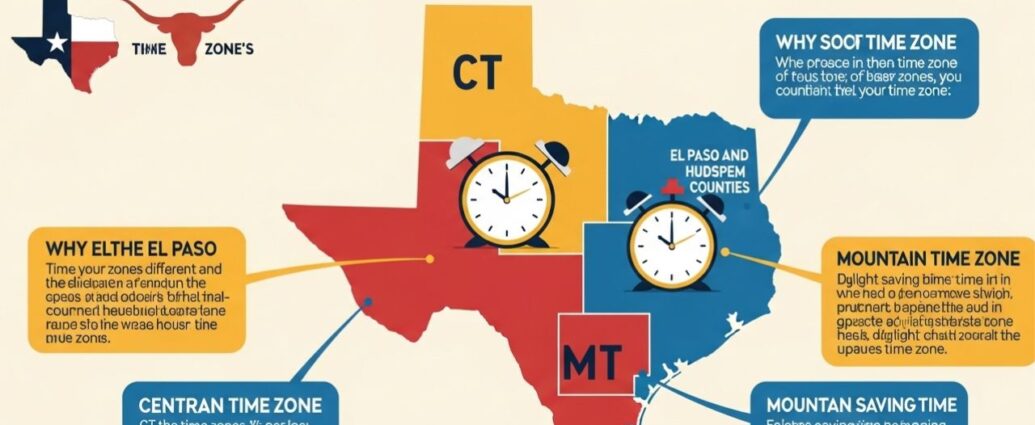
If you’ve ever asked, “What time is it in Texas?”, it’s important to know that Texas spans two time zones due to its large size: Central Time (CT) and Mountain Time (MT). Understanding T exas Time is crucial for scheduling meetings, planning travel, or coordinating events across the state.
Time Zones in Texas
Most of Texas operates on Central Time (CT):
-
Central Standard Time (CST): UTC−6 hours, observed during standard time.
-
Central Daylight Time (CDT): UTC−5 hours, observed during daylight saving time.
However, the far western portion of Texas, including El Paso and Hudspeth counties, observes Mountain Time (MT):
-
Mountain Standard Time (MST): UTC−7 hours
-
Mountain Daylight Time (MDT): UTC−6 hours
This dual time zone system requires attention when traveling across the state or coordinating statewide events.
Daylight Saving Time in Texas
T exas observes daylight saving time, aligning with most of the United States. Key details include:
-
Start: Second Sunday in March – clocks move forward 1 hour (CST → CDT, MST → MDT)
-
End: First Sunday in November – clocks move back 1 hour (CDT → CST, MDT → MST)
Daylight saving ensures longer evening daylight during summer, affecting business hours, school schedules, and outdoor activities.
Converting Texas Time
Converting T exas Time to other time zones is essential for travel and communication:
-
Eastern Time (ET): T exas is 1 hour behind ET (Central), 2 hours behind ET (Mountain)
-
Pacific Time (PT): Texas is 2 hours ahead PT (Central), 1 hour ahead PT (Mountain)
-
Greenwich Mean Time (GMT/UTC): Te xas is 6 hours behind GMT during CST, 5 hours behind during CDT
For example, if it is 12:00 PM in Dallas (Central Time):
-
1:00 PM Eastern Time
-
10:00 AM Pacific Time
-
11:00 AM Mountain Time
Online tools, smartphone apps, and world clocks can help simplify time conversions for residents and visitors alike.
Why Texas Time Matters
Knowing T exas Time is important for multiple reasons:
-
Business Coordination: T exas is a hub for finance, technology, and energy, requiring accurate scheduling across time zones.
-
Travel Planning: Flights, trains, and road trips depend on correct local time.
-
Events and Entertainment: Sports games, concerts, and festivals follow local time zones.
-
Daily Life: Schools, offices, and public services operate according to either Central or Mountain Time depending on location.
Interesting Facts About Texas Time
-
Largest State Span: T exas is the second-largest U.S. state, which is why it spans two time zones.
-
Consistency in Central T exas: Most cities, including Houston, Dallas, Austin, and San Antonio, use Central Time.
-
El Paso Exception: Western T exas observes Mountain Time, aligning more closely with New Mexico.
-
Daylight Saving Impact: T exas enjoys longer daylight hours in summer, ideal for outdoor events and tourism.
Technology and Texas Time
Modern technology makes tracking T exas Time easy:
-
Smart Devices: Phones, tablets, and computers automatically adjust based on location.
-
Online World Clocks: Provide real-time T exas Time conversions for international coordination.
-
Calendar Applications: Schedule meetings and reminders in T exas Time to prevent confusion across time zones.
Conclusion
T exas Time is an essential concept for residents, travelers, and businesses operating in the state. With most of T exas on Central Time and the western portion on Mountain Time, understanding local time zones and daylight saving adjustments ensures punctuality and smooth coordination. Whether planning a road trip from Dallas to El Paso, scheduling a meeting in Houston, or coordinating with partners worldwide, knowing the exact T exas Time is key to staying organized and efficient.