
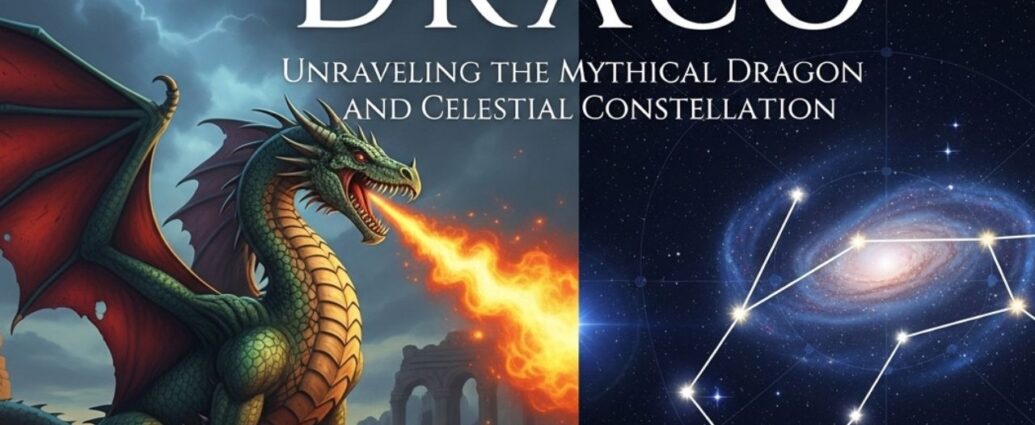
The name Draco carries a rich history that spans mythology, astronomy, and popular culture. From the ancient legends of fearsome dragons to the celestial constellation that has fascinated stargazers for centuries, Draco represents more than just a mythical creature. This article explores the origins, symbolism, and cultural significance of Draco, uncovering its enduring presence in human imagination.
Origins of Draco in Mythology
In Greek mythology, Draco is often depicted as a formidable dragon or serpent. The most famous tale involves Draco guarding sacred treasures or sacred spaces, often confronting heroes who sought glory or wisdom. The myths portray Draco as both a symbol of danger and protection, highlighting humanity’s complex relationship with power and the unknown.
Interestingly, Draco was not merely a creature of destruction. In some myths, Draco served as a guardian, reflecting the duality of fear and reverence associated with dragons. This dual nature allowed the legend to endure across centuries, shaping storytelling traditions in various cultures.
Draco in Astronomy
The influence of Draco extends far beyond mythology. In the night sky, Draco is a prominent constellation located in the northern celestial hemisphere. Its serpentine form twists around the north celestial pole, making it visible throughout the year in many parts of the world.
The constellation contains notable stars such as Thuban, which held the title of North Star around 2700 BCE. Ancient civilizations used D raco for navigation and as a marker of seasonal changes, demonstrating how myth and science often intertwined. Modern astronomers continue to study D raco, uncovering its mysteries and contributing to our understanding of stellar evolution.
Draco in Literature and Pop Culture
The legend of D raco has permeated literature, films, and even video games. Its association with dragons and magical beings makes it a popular figure in fantasy genres. From classic works to contemporary media, D raco symbolizes both danger and fascination, often inspiring characters who embody courage, curiosity, or mystical power.
In modern culture, the name D raco has been adapted for characters that embody intelligence, cunning, or a sense of mystique. Its enduring presence highlights how mythological motifs continue to influence storytelling across generations.
Symbolism of Draco
The figure of D raco represents multiple layers of symbolism. Traditionally, it embodies power, guardianship, and fear. The serpent-like qualities suggest adaptability and mystery, while its role in guarding treasures underscores vigilance and strength.
In contemporary interpretations, D raco often symbolizes personal transformation and resilience. Just as dragons shed old forms or breathe life into legends, D raco encourages reflection on inner strength and the challenges one must overcome.
Draco Around the World
The story of D raco is not confined to Greek mythology alone. Various cultures have their own dragon legends, reflecting similar themes of protection, power, and fear. From Chinese dragon lore to Norse mythology, the motif of a formidable dragon continues to captivate human imagination.
These global interpretations enrich our understanding of Dr aco as a universal symbol. Despite regional differences, the underlying message remains consistent: dragons represent both awe-inspiring strength and the eternal human fascination with the unknown.
Conclusion
From mythological tales to celestial wonders, D raco remains a timeless figure in human culture. Its presence in mythology, astronomy, literature, and global folklore highlights its enduring influence on our imagination. As a symbol of strength, mystery, and transformation, D raco continues to inspire curiosity and wonder, proving that some legends are truly eternal.