
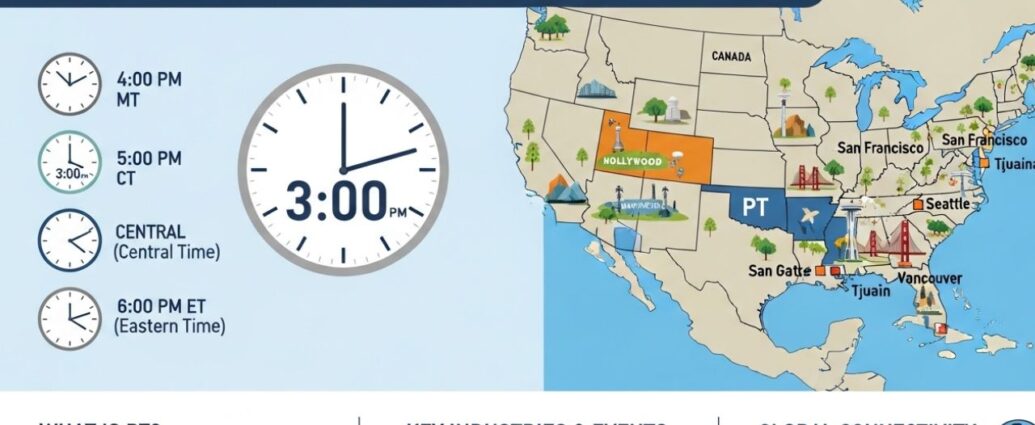
PT Tim e, short for Pacific Time, is the time zone used by the westernmost regions of the United States and Canada. Understanding PT Tim e is essential for scheduling, travel, business communication, and managing daily activities across different time zones. With the rise of remote work and global interactions, knowing the correct PT Ti me ensures smooth coordination and avoids confusion.
What is PT Time?
PT T ime refers to the Pacific Time Zone (PT), which is 8 hours behind Coordinated Universal Time (UTC-8) during standard time and 7 hours behind (UTC-7) during daylight saving time. This time zone covers major cities such as Los Angeles, San Francisco, Seattle, and Vancouver.
Why PT Time Matters
-
Scheduling Meetings: For businesses interacting nationally or globally, knowing PT Ti me helps schedule meetings without conflicts.
-
Travel Planning: Travelers flying across the United States must adjust their plans according to PT Ti me to avoid missed flights or connections.
-
Media and Broadcasts: Many television shows, events, and live broadcasts are scheduled based on PT Ti me, especially in the western US.
PT Time vs Other US Time Zones
The United States has multiple tim e zones, and PT Tim e is just one of them. Comparing PT Ti me with other zones helps prevent confusion:
-
Eastern Ti me (ET): PT Ti me is 3 hours behind ET. For example, when it’s 12 PM in New York (ET), it’s 9 AM in Los Angeles (PT).
-
Central Ti me (CT): PT Ti me is 2 hours behind CT.
-
Mountain Tim e (MT): PT Tim e is 1 hour behind MT.
Understanding these differences is crucial for cross-country communication and planning.
Daylight Saving
PT Tim e observes daylight saving ti me (DST) from the second Sunday in March to the first Sunday in November. During DST, clocks are set forward by one hour, effectively making PT Ti me UTC-7. Outside of DST, it reverts to standard time at UTC-8.
Regions Using
The Pacific Time Zone includes the following areas:
-
United States: California, Washington, Oregon (most areas), Nevada (most areas)
-
Canada: British Columbia (most areas)
-
Mexico: Baja California
This coverage makes PT Ti me a major reference point for business and travel on the western side of North America.
How to Check
With multiple ti me zones and daylight saving adjustments, checking PT Ti e accurately is important.
Online Tools
Websites like timeanddate.com and worldtimebuddy.com allow users to check PT Tim e instantly and compare it with local ti me in other regions.
Smartphone Features
Most smartphones can automatically adjust to PT Ti me if location services are enabled, accounting for DST and other changes. Adding multiple time zones to your clock app is also helpful for international communication.
Using Abbreviations
PT Ti me is often represented as:
-
PST: Pacific Standard Time (UTC-8)
-
PDT: Pacific Daylight Time (UTC-7)
Being familiar with these abbreviations avoids confusion when scheduling or reading event times.
PT Time for Travelers and Businesses
Travelers moving between PT Ti me and other zones need to account for t ime differences to manage flights, check-ins, and activities. Businesses coordinating nationally or internationally must schedule meetings carefully to accommodate PT Tim e and other zones.
Tips for Managing
-
Always confirm whether a tim e is in PST or PDT.
-
Use online world clocks to check differences before international meetings.
-
Set reminders adjusted for PT Tim e when traveling across US ti me zones.
-
Consider PT Tim e when following live events or broadcasts from the west coast.
Common Misconceptions About
-
PT Tim e is the same all year: Wrong. PT Ti me changes with daylight saving adjustments.
-
All of Oregon and Nevada follow PT Ti me: Some regions in these states follow Mountain Ti me.
-
PT Ti me is only relevant in the US: PT Tim e is used in parts of Canada and Mexico as well.
Conclusion
PT Tim e plays a crucial role in organizing daily life, travel, and business on the west coast of North America. From coordinating meetings to planning trips and understanding broadcast schedules, knowing PT Ti me ensures efficiency and avoids misunderstandings. Using online tools, smartphone features, and awareness of daylight saving changes can make managing PT Tim e simple and stress-free.